
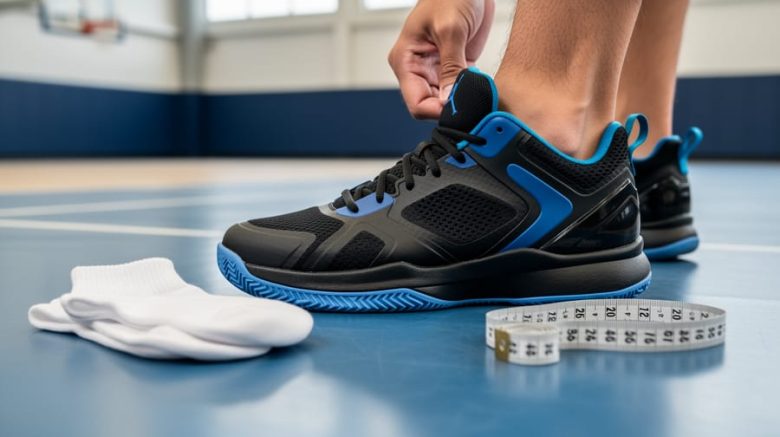
Finding the right basketball shoe in size 8.5 means understanding how each brand’s fit differs and matching the shoe’s design to your playing style, not just ordering your usual size. Size 8.5 sits in a competitive sweet spot where most brands offer their full performance lineup, but half-size variations can mean the difference between lockdown support and painful hot spots during a pickup game. Nike typically runs narrow in 8.5, Adidas offers a roomier toe box, and brands like New Balance cater to wider feet, making brand-specific knowledge essential before you click “add to cart.”
The search for size 8.5 basketball shoes goes beyond inventory availability. You’re navigating a landscape where performance tech meets precise biomechanics, and a shoe that works for someone else’s 8.5 foot might leave you with blisters or instability on the court. Guards who rely on quick cuts need different cushioning than forwards boxing out in the paint, and your foot shape matters as much as the number on the box. Whether you’re upgrading from worn-out trainers or buying your first performance pair in 2026, the right 8.5 balances snug heel lock with comfortable toe room, supports your natural stride, and matches the demands you’ll put on them during actual play. This guide breaks down exactly what to evaluate, which shoe types suit different players, and how to avoid the sizing mistakes that send perfectly good shoes back to the warehouse.
Understanding Size 8.5: Who It’s For and Why Sizing Matters
The Size 8.5 Sweet Spot
Size 8.5 sits comfortably in the middle of the men’s basketball shoe size spectrum, typically worn by players between 5’7″ and 6’1″ who weigh 140-180 pounds. This demographic includes a significant portion of guards and combo guards at both recreational and competitive levels, making it one of the most commonly produced sizes across all major brands.
You’re in luck if you wear 8.5. Manufacturers consistently stock this size range because it hits a volume sweet spot, large enough production runs mean better availability and often first access to new colorways and limited releases. Unlike shoppers hunting for size 13 or 7, you’ll rarely face “sold out in your size” disappointments.
The mid-range position does create one notable challenge: inconsistency between brands matters more. While extreme sizes force manufacturers to adjust their patterns significantly, size 8.5 falls right where different brands’ sizing philosophies diverge most. Nike might fit perfectly while Adidas runs a half-size large, or vice versa. This variation means you can’t autopilot your purchases, each brand requires individual attention.
The upside? Almost every basketball shoe model ever made includes size 8.5, giving you access to the full market without the compromises that smaller or larger-footed players face.
How Basketball Shoes Fit Differently
Basketball shoes are engineered for lateral movement, ankle support, and court traction, fundamentally different priorities than running shoes or lifestyle sneakers. This means the fit philosophy varies across categories. Running shoes often prioritize forward motion and running shoes may fit larger to prevent toe jamming during downhill strides, while basketball shoes typically fit snugger through the midfoot to prevent slippage during quick cuts. Casual sneakers tend to be the most forgiving, with roomier toe boxes and less structured support.
In practice, if you wear 8.5 in your everyday Vans or Converse, you might need an 8 in performance basketball shoes that lock down tighter. Conversely, if you’re coming from minimalist running shoes, the added cushioning and internal structure in basketball shoes can make the same numerical size feel smaller. The material matters too: leather uppers stretch and mold over time, while synthetic mesh and Flyknit constructions maintain their shape but offer less give. Always account for thick basketball socks when comparing across categories, they add about a half-size worth of volume that isn’t a factor in your summer running gear.
Key Factors When Buying Size 8.5 Basketball Shoes
Measuring Your Foot Correctly
Measure your feet in the late afternoon or evening, your feet swell throughout the day, and you want to capture their maximum size. Stand up while measuring; sitting compresses your foot and gives you a shorter measurement than what you’ll actually need on the court.
Place a piece of paper against a wall. Step on it with your heel flush against the wall, then mark where your longest toe ends. Measure from the wall to that mark in inches. For width, wrap a measuring tape around the widest part of your foot (usually the ball). Compare these numbers to a sizing chart, not just the length, width matters just as much for basketball shoes.
Wear your actual basketball socks during this process. They’re thicker than regular socks and add roughly 1-2mm to your measurements. If you measure barefoot and then wear performance socks, you might end up cramped in shoes that should fit perfectly.
Measure both feet. Most people have one foot slightly larger than the other, always buy for the bigger foot. That quarter-size difference can mean the difference between comfortable performance and blisters after the first quarter.
Width Considerations for Size 8.5
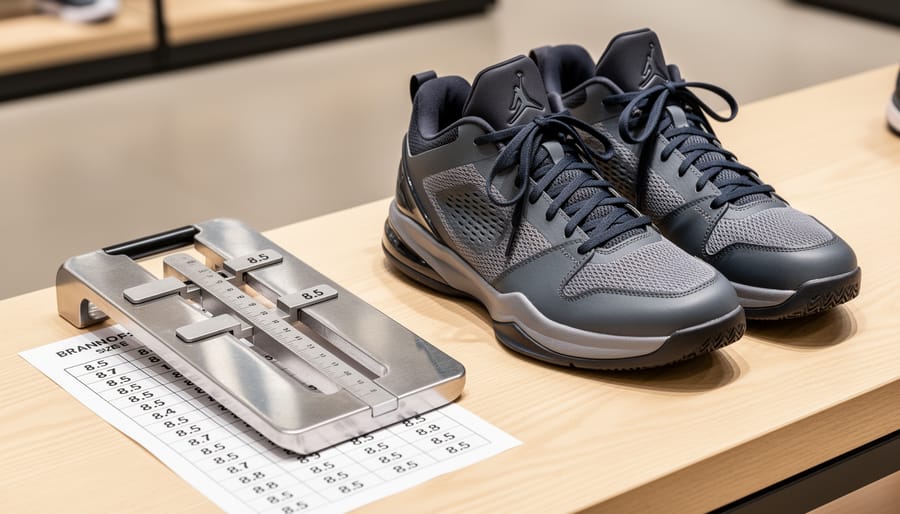
Your foot width matters just as much as length when buying size 8.5 basketball shoes. Most brands offer their 8.5 models in standard D width for men (B for women), but narrow and wide options exist if you know where to look.
To determine your width, trace your foot on paper and measure the widest part across the ball. Compare this to standard sizing charts: under 3.5 inches typically needs narrow, 3.5-3.9 inches fits standard, and over 4 inches requires wide. If your toes spill over the midsole when standing in standard-width shoes, you need wider sizing.
Nike and Adidas rarely offer width variations in 8.5, so wider-footed players often size up to 9, which creates length problems. New Balance excels here with true wide options in their basketball line. Under Armour’s Curry series runs slightly wider in standard width, making it friendlier for broader feet without special ordering.
For narrow feet, tightening laces only goes so far. Look for shoes with adjustable straps or consider adding insoles to fill excess space rather than sizing down, which shortens the shoe uncomfortably.
Brand-Specific Sizing in 8.5
Brand sizing in 8.5 varies more than most people realize, and knowing these differences before you order can save you return hassles and wasted time. Most brands don’t follow a universal standard, so your regular 8.5 in Nike won’t necessarily match your 8.5 in Adidas.
Nike basketball shoes typically run narrow and slightly short in 8.5, especially performance models like the LeBron and KD lines. If you have wider feet or prefer a roomier fit, consider going up half a size. Their retro models like the Air Jordan 1 usually fit true-to-size but still lean narrow through the midfoot.
Adidas has shifted to a more accurate fit with recent models, but their 8.5 still tends to run slightly large, particularly in shoes with Boost cushioning. The Harden series and Dame line generally give you a bit more length than expected, so if you’re between sizes, stick with 8.5 rather than sizing up.
Under Armour delivers the most consistent true-to-size fit across their basketball lineup. The Curry series in 8.5 matches standard measurements reliably, making them a safe choice if you can’t try before buying.
| Brand | Typical Fit in 8.5 | Sizing Recommendation |
|---|---|---|
| Nike | Runs narrow/short | Size up 0.5 for wide feet |
| Adidas | Runs slightly large | True-to-size or down 0.5 |
| Under Armour | True-to-size | Order your normal 8.5 |
| Puma | Runs narrow | Size up for comfort |
Puma’s basketball shoes, while gaining popularity through their MB and Stewie models, run noticeably narrow in 8.5. The toe box feels cramped compared to other brands at the same size. New Balance has entered the basketball market with a roomier, more accommodating 8.5 that suits wider feet well without requiring a size adjustment.
Always check brand-specific reviews for the exact model you’re considering, since sizing can vary even within a single brand’s lineup.
Types of Size 8.5 Basketball Shoes Compared
High-Tops vs. Mid-Tops vs. Low-Tops
The ankle height of your size 8.5 basketball shoe directly impacts how snug the entire shoe feels on your foot. High-tops add material around the ankle that can make the overall fit feel more secure but also slightly tighter, if you’re between sizes, high-tops in 8.5 might push you toward 9. Mid-tops offer a middle ground with less ankle restriction while maintaining stability, and they typically fit most true-to-size in length. Low-tops run the loosest since there’s no ankle collar creating additional tension, which means your 8.5 might actually feel roomier than expected.
For position-specific guidance: guards who need maximum mobility often prefer low-tops or mid-tops in their true size, as the reduced material won’t interfere with quick cuts. Forwards can go either way depending on playing style, though power forwards who battle in the paint often choose high-tops for added ankle support, just ensure the 8.5 doesn’t feel constrictive when you jump and land. Centers typically gravitate toward high-tops for maximum protection, but this means trying them on is essential since the added height can create pressure points if the fit isn’t spot-on.
Performance vs. Lifestyle Basketball Shoes
Performance basketball shoes in 8.5 typically fit snugger than their lifestyle counterparts because they’re engineered for lockdown during quick cuts and jumps. You’ll notice performance models hug your midfoot and heel tighter, with less wiggle room in the toe box compared to lifestyle versions of what looks like the same shoe. This tighter construction means your true size 8.5 in a court-ready model might feel half a size smaller than expected, especially in brands like Nike’s signature lines or Adidas Harden models.
Lifestyle and retro basketball shoes prioritize comfort for all-day wear over court performance, which translates to a more relaxed fit in 8.5. The materials are often softer, the internal structure less rigid, and the overall volume roomier, making them feel closer to running shoe sizing. Classic models like Air Jordan 1s or Adidas Forums generally run true to size or even slightly large in 8.5, whereas their performance equivalents would fit tighter.
- Performance: Tighter lockdown, firmer materials, smaller-feeling toe box
- Lifestyle: Roomier fit, softer construction, more break-in comfort
- Performance: Often requires exact size or half-size up for wide feet
- Lifestyle: Usually safe to order your standard size 8.5
If you’re buying a lifestyle version of a performance shoe you already own in 8.5, expect it to feel different. The styling might be identical, but the fit won’t be, lifestyle models almost always accommodate thicker socks and longer wear sessions better than their performance siblings.
Budget vs. Premium Options in Size 8.5
Price directly impacts how your size 8.5 basketball shoes will fit over time. Budget models under $80 typically use synthetic leather uppers that stretch more during break-in, meaning that snug initial fit in 8.5 often loosens within two weeks of regular play. Premium shoes ($150+) feature engineered mesh and high-grade materials that maintain their shape, so the 8.5 you try on stays consistent throughout the shoe’s lifespan.
Cushioning systems create the biggest fit difference. Entry-level foam compression in budget 8.5s can drop your heel 3-5mm lower after a month, effectively changing how the shoe fits your midfoot. Premium options like Nike Zoom Air or Adidas Boost compress minimally, keeping your 8.5 fitting the same from purchase through 50+ games.
Sizing consistency matters here too. Major brands apply stricter manufacturing tolerances to flagship models, your 8.5 in a $180 LeBron will match the measurements more precisely than an $60 team shoe where half-size variations between pairs happen regularly.
How to Know If Your 8.5 Basketball Shoes Fit Right
The Thumb Test and Other Fit Checks
Press your thumb against the toe box with the shoe on your foot. You need about a thumb’s width (roughly half an inch) between your longest toe and the shoe’s end. Less space means your toes will jam during quick stops; more suggests you’re risking blisters and instability.
Next, check heel lock. With the shoes laced properly, try to lift your heel inside the shoe. A properly fitted 8.5 should keep your heel planted with minimal movement. If your heel slides up more than a quarter inch, you need better lacing or a different model.
Perform the jump test right in the store. Jump vertically a few times, then do a quick lateral shuffle. Your foot shouldn’t slide forward on landing, and the shoe should move with your foot during cuts, not against it.
Finally, walk on an incline if possible. Your toes should never touch the front when walking downhill. Bend into a defensive stance and check if the shoe pinches anywhere across the top or sides. Discomfort during these basic movements won’t magically disappear later.
Break-In Period Expectations
A properly sized 8.5 basketball shoe should feel comfortable within 2-3 wearings, totaling about 4-6 hours of play. During this break-in window, expect some stiffness in the upper materials and slight pressure points around the ankle collar or midfoot. These sensations should gradually decrease, not intensify.
Normal break-in discomfort includes minor rubbing that doesn’t cause blisters, temporary tightness that loosens as materials flex, and cushioning that feels firmer initially before settling. Your size 8.5 should still allow proper toe clearance and heel lock from day one, these fundamentals don’t improve with break-in.
Red flags that signal wrong sizing include persistent heel slippage, toes jamming during stops regardless of wear time, numbness in your forefoot after 20 minutes, or blisters forming in the same spots repeatedly. If pain worsens after the third session, the shoe doesn’t fit correctly.
Don’t convince yourself severe discomfort will magically resolve. Basketball shoes use resilient materials that conform slightly but won’t transform a poor fit into a good one. If your 8.5 causes genuine pain rather than mild adjustment pressure after a week of regular use, exchange them. Playing through bad fit risks injury and won’t break the shoe into submission.
Common Mistakes to Avoid When Buying Size 8.5
Assuming All 8.5s Fit the Same
Size 8.5 on the box doesn’t guarantee the same fit across different models or brands. Nike’s LeBron line in 8.5 typically runs a half-size large, while their Kobe series runs narrow and true-to-length. Adidas Dame models fit roomier in the toe box than Harden shoes at the identical 8.5 marking. Under Armour’s Curry line runs notoriously snug compared to their team basketball shoes. Even within a single brand’s lineup, construction methods, materials, and design philosophies create measurable differences. A knit upper 8.5 stretches differently than leather or synthetic overlays. Assuming uniformity across all 8.5s leads to blisters, restricted movement, or dangerous slippage during cuts and jumps.
Ignoring Your Playing Style
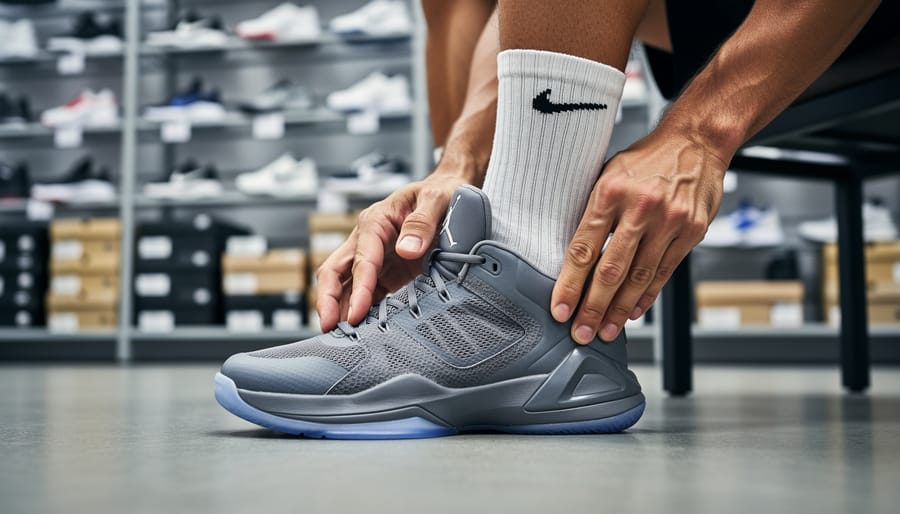
Your position and playing style directly affect how your size 8.5 basketball shoes should fit. Guards need a snugger, more responsive fit because quick cuts and direction changes demand immediate foot-to-shoe connection, even a quarter-inch of extra space causes slippage during crossovers. Forwards benefit from slightly more toe room since they’re constantly jumping and landing, which pushes feet forward on impact. Centers can handle a more relaxed fit given their primarily vertical movement patterns and need for stability over speed.
Consider your actual movements too. If you’re a shooter who primarily moves laterally, you need lateral lockdown more than extra length. Drive-heavy players who explode to the basket require heel security to prevent sliding during acceleration. Buying size 8.5 without considering how you actually play leads to either cramped performance shoes or sloppy ones that can’t support your specific demands on court.
Buying for Growth or ‘Room’
Oversizing basketball shoes creates serious injury risks, too much room causes your foot to slide during cuts and jumps, leading to blisters, ankle rolls, and loss of court control. Your shoe should fit snugly now, not six months from now.
The one exception: if you’re buying for a teenager still growing, a maximum half-size up might work for a few months. But full-size jumps? Never worth the sprained ankle. Adults wearing 8.5 should always buy their true size, your feet stopped growing, so your shoes shouldn’t have growth room.
Top Recommendations for Size 8.5 Basketball Shoes in 2026
Best True-to-Size 8.5 Models
When you’re tired of sizing roulette, these models deliver consistent 8.5 fits that match your Brannock measurement. The Nike LeBron 21 runs remarkably true-to-size in 8.5, with players reporting the same fit across multiple colorways, what works in one works in all. Adidas Dame 8 maintains its reputation for sizing accuracy, offering that goldilocks fit without the guesswork. The New Balance Two WXY v4 stands out for its precise 8.5 that accommodates both narrow and standard widths comfortably.
For guards who value consistency, the Puma MB.02 delivers identical fit across its entire 8.5 production run, eliminating variance between releases. Under Armour Curry 11 continues the line’s tradition of accurate sizing, making it safe to order online if you’ve worn any previous Curry model in 8.5.
Best 8.5 Options for Wide Feet
Finding basketball shoes that accommodate wide feet in size 8.5 means you don’t have to compromise fit for comfort. The Nike LeBron 21 offers a naturally wider forefoot in 8.5, with adjustable lacing that lets you dial in the perfect fit without going up to 9. The New Balance Two WXY v4 runs wider than most competitors’ 8.5 models, particularly through the midfoot, a blessing for players tired of lateral squeeze during quick cuts.
For budget-conscious wide-footed players, the Under Armour Curry 11 in 8.5 provides surprisingly generous width through the toe box while maintaining heel lockdown. The knit upper stretches just enough to accommodate wider feet without feeling sloppy. If you’re between standard and wide, try the Adidas Dame 8 in 8.5 first, it splits the difference nicely and breaks in more forgiving than narrower models.
Best Budget 8.5 Basketball Shoes
Finding quality 8.5 basketball shoes under $80 doesn’t mean sacrificing consistent fit. The Nike Precision 6 delivers true-to-size 8.5 performance at around $70, with reliable lockdown across production runs. Under Armour’s Lockdown 6 ($65) consistently fits standard 8.5 measurements and offers decent width accommodation for the price point.
Adidas Dame 8 EXTPLY often drops to $75-85 and maintains the same sizing as its premium counterparts, what you measure is what you get. Budget models from AND1 (Attack Mid, $50-60) run surprisingly consistent in 8.5, though break-in takes longer than pricier options.
The sizing advantage? Budget lines stick to proven lasts and change molds less frequently than signature series, meaning your 8.5 fits predictably across colorways and restocks. Just verify the exact model name, since budget brands sometimes modify fits between iterations while keeping similar naming.
Frequently Asked Questions About Size 8.5 Basketball Shoes
Should you size up from your regular sneaker size when buying 8.5 basketball shoes? Not necessarily, most people wear the same size in basketball shoes as their everyday shoes, but brand variation matters more than the shoe category. If you normally wear 8.5 in running shoes or casual sneakers, start with 8.5 in basketball shoes and adjust based on the specific model’s fit reputation.
Should I size up from my regular shoe size for basketball shoes?
Most people wear the same size in basketball shoes as their everyday shoes. Start with your normal size and adjust based on the specific brand and model, as some run large or small regardless of category.
Do basketball shoes stretch over time?
Quality basketball shoes soften and mold to your foot during the break-in period but don’t stretch significantly in length. If the shoe feels tight in the toe box initially, it won’t magically become a half-size larger with wear.
Can I wear size 8 or 9 instead of 8.5?
Only if absolutely necessary, going a full half-size up or down creates performance and safety issues. Size 8 will cramp your toes and cause blisters, while size 9 allows too much movement inside the shoe, increasing injury risk during cuts and jumps.
How do women’s basketball shoe sizes convert to men’s 8.5?
Men’s 8.5 equals women’s 10 in most basketball shoe brands. If you’re a woman buying men’s shoes for style or availability, go up 1.5 sizes from your women’s size.
The confusion about stretching often leads buyers to purchase shoes that feel slightly tight, expecting them to expand. While the upper materials will soften and conform to your foot shape after a few sessions, the shoe’s length stays essentially the same. If your toes touch the front when you first try them on, they’ll still touch after break-in.
Some players ask about alternating between sizes based on sock thickness or swelling. Your basketball shoes should fit properly with the socks you’ll actually wear during games, measure and try shoes on with those exact socks rather than adjusting shoe size to accommodate different sock weights.
Finding the right size 8.5 basketball shoes isn’t about chasing the hottest brand or latest signature model, it’s about fit, plain and simple. A perfectly-fitted 8.5 will outperform a poorly-fitted premium shoe every single time, and your feet, ankles, and knees will thank you for prioritizing comfort over hype.
Before you click “buy,” take five minutes to measure both feet properly. Try shoes on in the afternoon when your feet are slightly swollen, and actually move in them, don’t just stand there. If buying online, order from retailers with hassle-free returns so you can test them at home with your basketball socks on.
Remember that your 8.5 in running shoes might not translate directly to basketball footwear. Check brand-specific sizing charts, read reviews from verified buyers mentioning fit, and don’t hesitate to contact customer service with sizing questions. At ‘Shoe Reviews for Everyone,’ we’re committed to helping every player find their perfect fit, regardless of foot size or budget.
Your performance starts with your foundation. Get the sizing right in your 8.5 basketball shoes, and everything else, the crossovers, the cuts, the jumpers, gets easier.